
Indiana Court Records After Arrest
An arrest creates a law-enforcement and jail record first. The court record begins when the prosecutor files a charge or when the court receives a case, warrant, probable-cause filing, order, hearing entry, or other official item. The arrest can appear in a jail roster before a case is visible in MyCase. A court record can also remain after release from jail. That timing gap is normal because jails, prosecutors, clerks, and courts update different systems.
Indiana MyCase is the statewide public case-search portal for most courts using Odyssey. The Judicial Branch says anyone may search public, non-confidential case information and documents. It also warns that online information is not the official court record and that official records must be obtained from the court maintaining the record.
The Indiana MyCase public search is the statewide court-record search for public case information after a jail arrest.
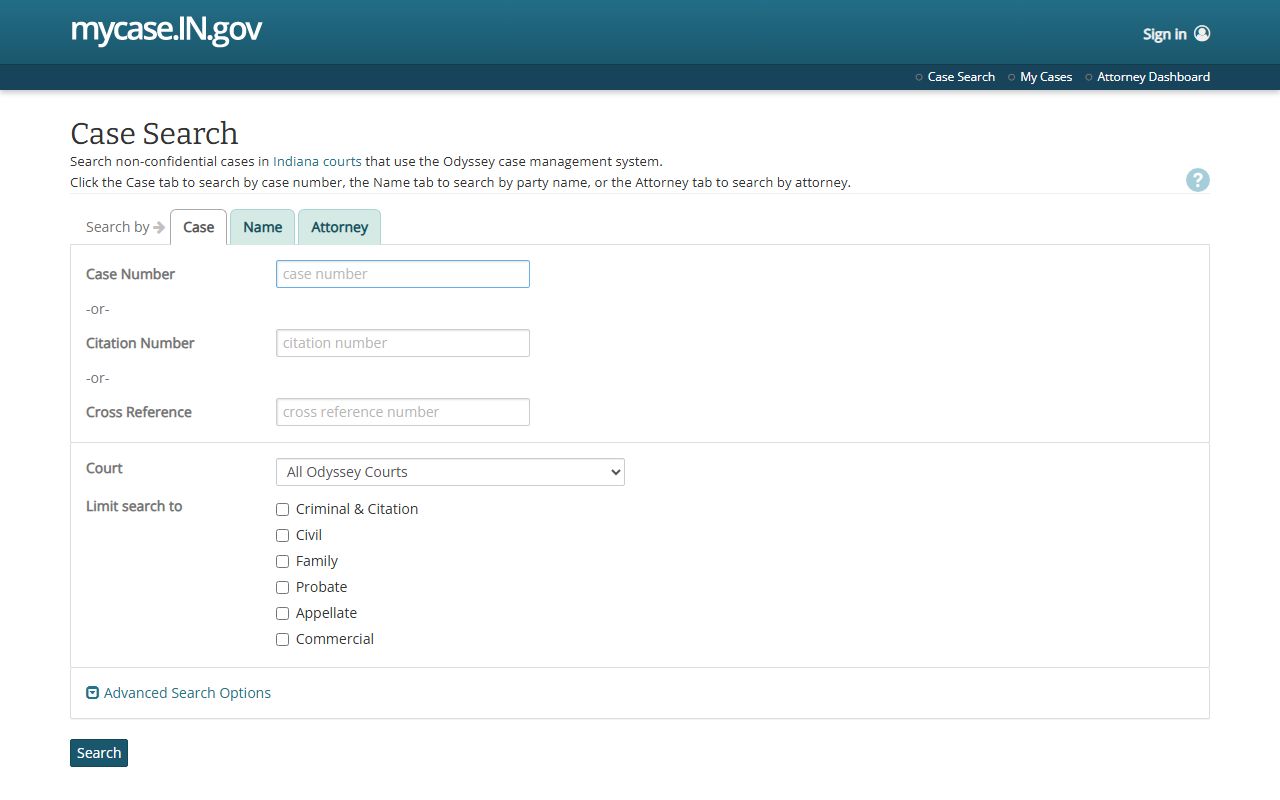
Use MyCase for filed case details, then verify custody through the county jail or IDOC when the physical hold matters.
Search Indiana Court Records
MyCase supports case, party, and attorney searches. Search tips from the Indiana Judicial Branch say case searches can use case number, citation number, or cross-reference number. Party searches use business name or last name, with first name, middle name, and date-of-birth refiners. Attorney searches use attorney number or name. No search returns more than 1,000 results, so broad names need refiners.
| MyCase search | Use | Limit |
|---|---|---|
| Case number | Best when known from bond, court, or jail paperwork | Must match the filed case |
| Party name | Useful for unknown case numbers | Common names need date or county context |
| Attorney | Find cases tied to counsel | Not useful for every arrest |
| Document access | View many public documents online | Some documents are offline, sealed, older, or confidential |
The MyCase help page explains Odyssey source data, online document limits, captcha, and the official-record caveat.
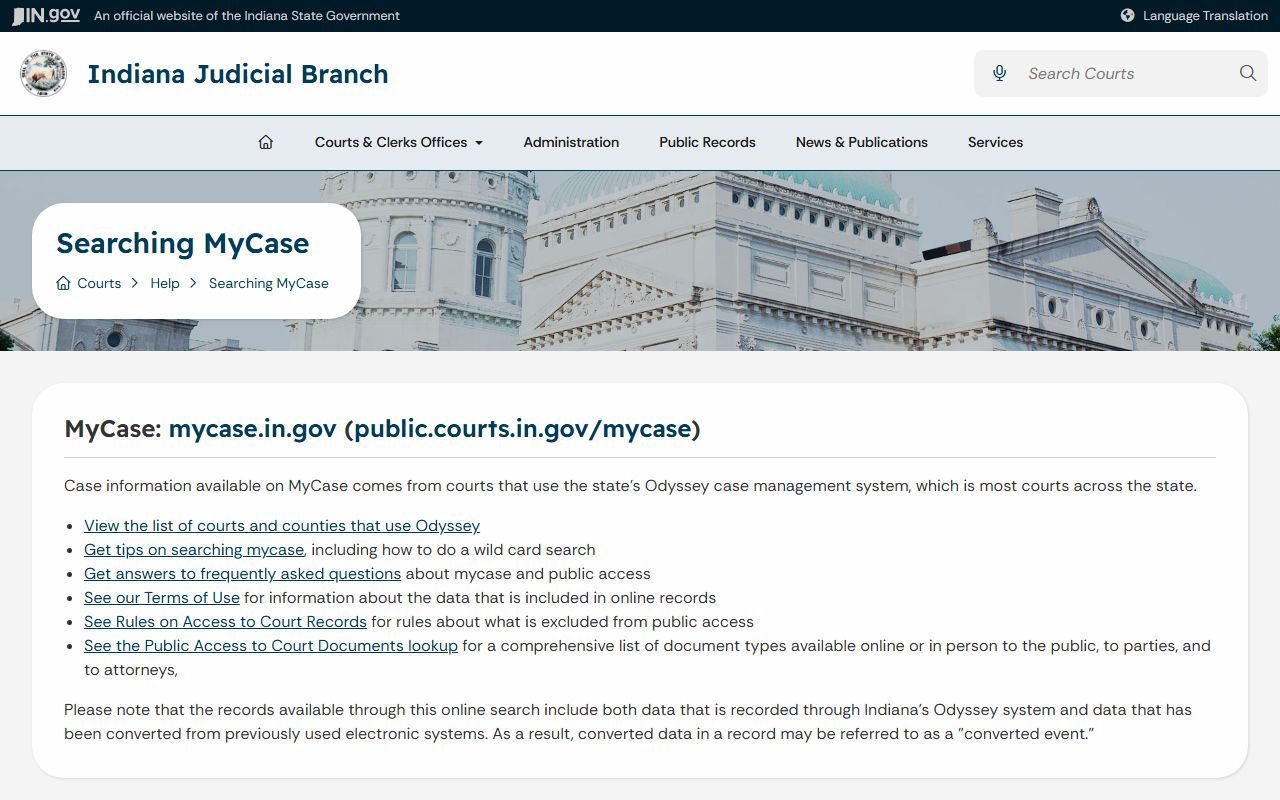
MyCase is a strong starting point, but the court maintaining the case remains the official record source.
Charges After Indiana Arrest
Court records after a jail arrest may include the charging document, probable-cause material, bond order, hearing notices, warrants, plea entries, judgment, sentencing order, and later post-conviction or expungement entries. The charging document labels the accusation; it is not the same as a conviction. The jail roster may use arresting-agency charge labels before the prosecutor files or amends the court charge.
| Document | Plain meaning | Where it appears |
|---|---|---|
| Complaint | Initial allegation or charging basis | Court file when public |
| Information | Formal prosecutor charge | Criminal case record |
| Indictment | Grand-jury charging document where used | Court case record |
Charge vs. conviction: A charge is an accusation in a case. A conviction requires a plea, verdict, or judgment entered by the court.
Indiana Arrest Case Status
Case status terms should be read with care. Pending means the court case is still active. Dismissed means the charge or case was dropped by court action, but the arrest or jail record may still exist unless another order affects access. Convicted means the court entered a conviction. Expunged or sealed means public access may be restricted, and the exact effect depends on the order and record type.
| Status | Meaning | Search effect |
|---|---|---|
| Pending | Open case or charge | Hearings and orders may continue |
| Dismissed | Charge or case ended without conviction | Some records may remain unless sealed or expunged |
| Convicted | Court entered guilt by plea or finding | May lead to jail, IDOC, probation, or other sentence |
| Sealed or expunged | Public access restricted by law or order | MyCase may hide or limit the record |
Indiana Court Access Rules
Indiana court records are governed by the Rules on Access to Court Records, with Rule 5 excluding some records from public access. Juvenile matters, sealed or expunged records, mental-health records, victim-sensitive details, protection-order material, confidential filings, and certain identifiers may be limited. APRA applies to agencies, but court-record access is controlled by court rules, not only by the public-records act.
The Indiana Rules on Access to Court Records explain public court-record access, and Rule 5 lists court records excluded from public access.
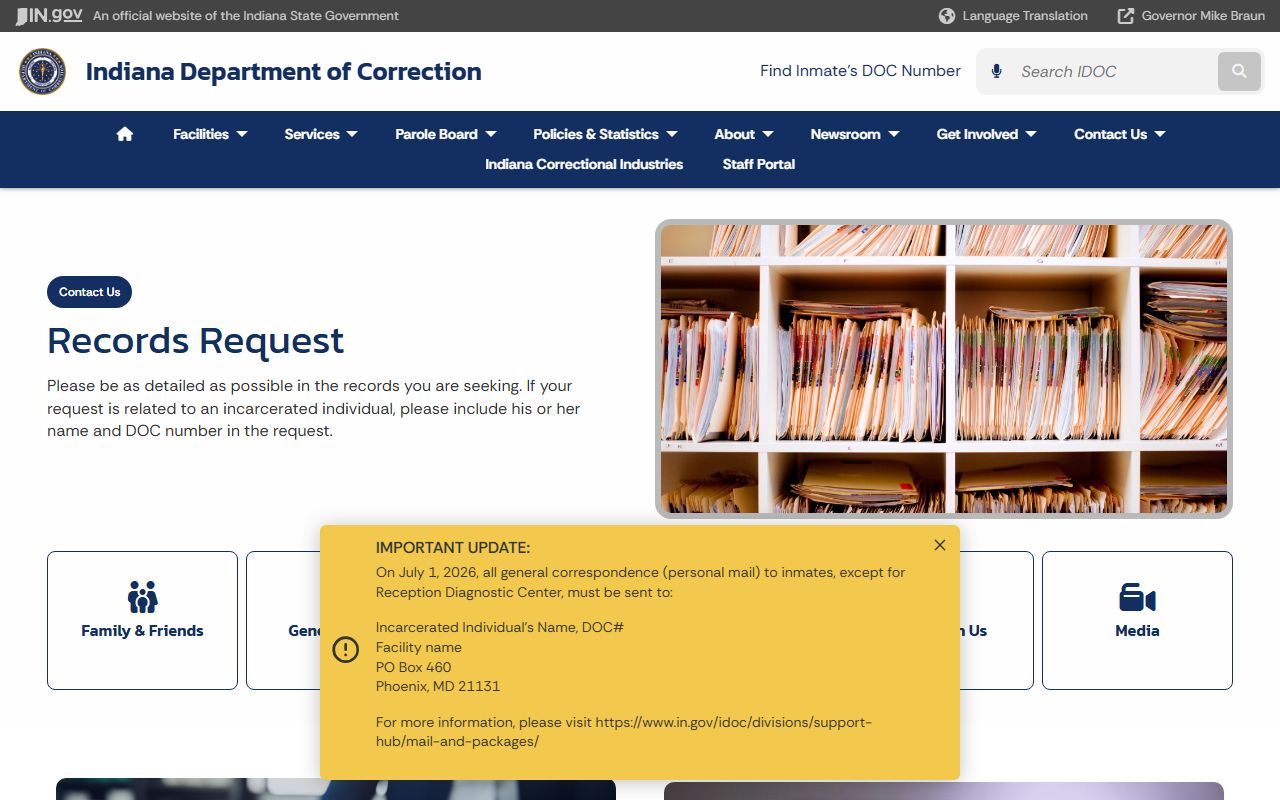
Use APRA for agency records, and use the court's access rules for filed case records.
Court Records and Custody
MyCase helps explain charges, warrants, hearings, bond orders, dispositions, and sentencing. It does not replace the custody system. A person can have a pending court case and be released. A person can be held in county jail before trial, moved to IDOC after sentencing, or transferred to BOP or ICE under a different custody authority. For booking and custody status, use the Indiana inmate records custody paths and the relevant county jail page.
The Indiana SAVIN portal can supplement court and jail searches by giving notification options for custody-status changes.
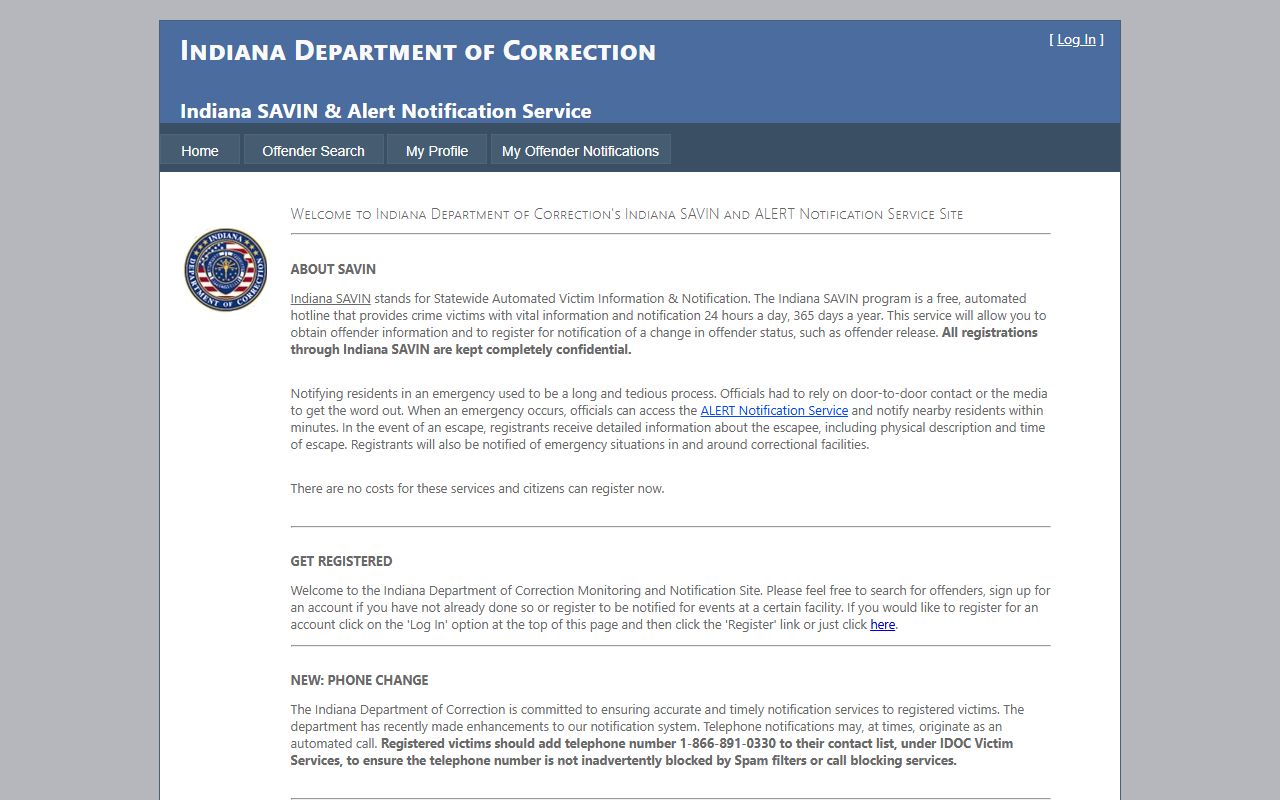
Notification records are helpful for status changes, but official case action still comes from the court file.
Official Indiana Court Records
Online case information is useful for locating a case, but official court records still come from the court that maintains the record. MyCase help materials state that many documents are online and free, but some documents are not online and older cases may be incomplete. A public user may see docket entries without every attached filing. A clerk may need a case number, party name, filing date, document title, and copy or certification request before producing the official record.
The difference matters after a jail arrest because the jail may use one charge label at booking and the prosecutor may file a different count in court. Bond can change after the first hearing. A warrant can be recalled, served, or replaced. A dismissal may end the court charge while the jail booking record remains a separate public record unless an expungement, seal, or other order changes access. The court file explains the legal case, while the jail record explains custody.
| Need | Use | Verify with |
|---|---|---|
| Case number or hearing | MyCase search | Court maintaining the case |
| Certified judgment | Clerk or court request | Official court record |
| Current custody | County jail, IDOC, BOP, or ICE | Holding agency |
| Photo or booking sheet | County sheriff or jail APRA request | Jail records custodian |
Sealed Indiana Arrest Records
Sealed and expunged records require special care. MyCase may hide or limit public access when a case is confidential, sealed, expunged, juvenile, or otherwise restricted by rule or order. That does not mean every related agency record vanished from every system at the same moment. A jail booking record, police report, prosecutor file, and court case can have different custodians and different access rules. Rule 5 exclusions and court orders control court-record access, while APRA and agency-specific limits affect sheriff and jail files.
For dismissed charges, reduced charges, or expungement questions, use the court record first and then contact the custodian that holds the specific record. A court can explain its case file. A sheriff can respond to a jail-record request. IDOC can address state prison records only after a state custody record exists.
Indiana Court Record Timing
A jail booking can appear before the prosecutor files charges, and a MyCase entry can appear after the person has already bonded out or moved. Search again after the first court day when a fresh arrest has no case result.
Public Record Search
Sponsored Results